AI lead generation sounds great on paper.
More automation. More leads. Less manual work.
That is exactly why so many businesses get it wrong.
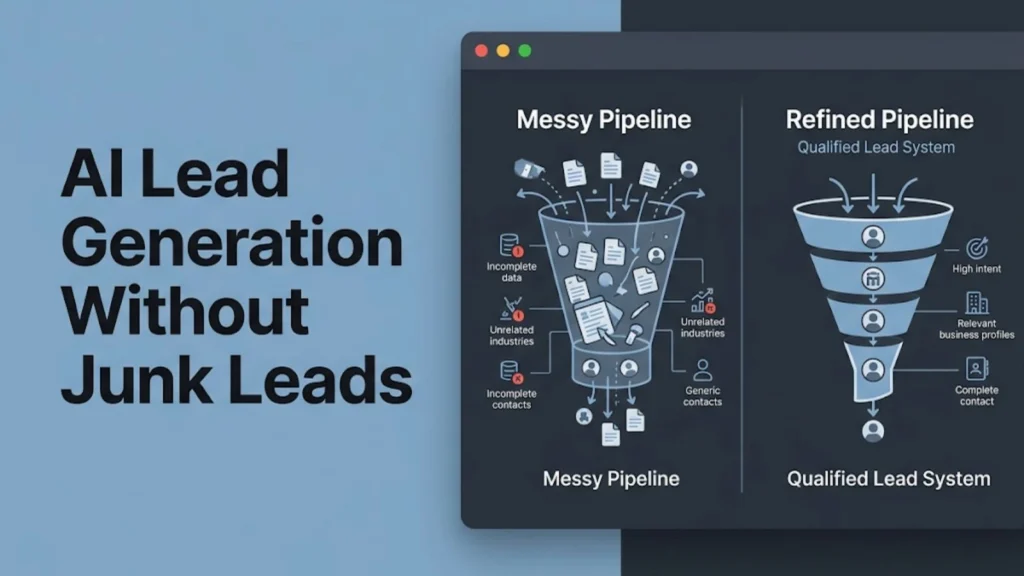
They use AI to speed up everything but forget one basic truth: more leads does not automatically mean better leads. In many cases, AI just helps teams generate bad-fit prospects faster, send low-trust outreach at scale, and fill the pipeline with people who were never serious buyers in the first place.
That is the real problem.
AI lead generation is useful. Very useful. But only when it improves targeting, qualification, prioritization, and response speed. The moment you use it like a volume machine without control, lead quality drops.
This guide breaks down where AI actually helps, where it hurts, and how to build an AI lead generation system that saves time without turning your funnel into a junk pile.
What Is AI Lead Generation?
AI lead generation is the use of artificial intelligence to support different parts of the lead generation process.
That can include:
- finding potential prospects
- enriching lead data
- segmenting audiences
- scoring leads
- personalizing outreach
- running chatbots for first-level qualification
- identifying buying signals
- improving follow-up timing
In simple terms, AI for lead generation is not just about getting names and emails.
It is about helping you decide:
- who to target
- who to prioritize
- what message to send
- when to send it
- which leads are real opportunities
That is where many people get confused.
They think lead generation automation with AI means full autopilot. It does not. Good AI lead generation is not about removing human judgment. It is about removing low-value manual effort.
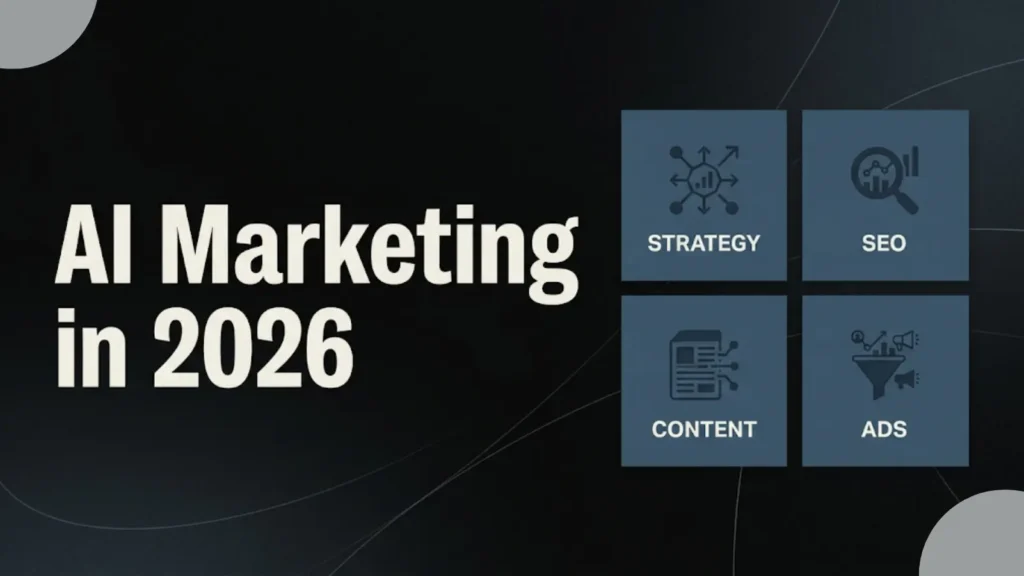
Read More:- AI Marketing in 2026: Complete Business Guide to Strategy, SEO, Content, and Ads
Why More Leads Does Not Mean Better Leads
A business does not grow because the CRM has more entries.
It grows because the right people enter the pipeline.
You can generate 500 leads with weak filters and poor intent and still close less business than a team generating 50 highly relevant leads. This is where AI often creates false confidence. Dashboards look active. Forms get filled. Chatbots collect data. Outreach volume increases.
But revenue does not move.
Why?
Because low-quality leads usually bring one or more of these problems:
- wrong audience
- fake interest
- poor fit
- low purchasing power
- no urgency
- no authority to decide
- spam or bot submissions
- irrelevant outreach replies
If AI is increasing activity but not improving fit, then it is not solving lead generation. It is just scaling noise.
That is why AI qualified leads matter more than raw lead count.
Where AI Actually Helps in Lead Generation
AI becomes useful when the goal is precision and speed, not blind automation.
Here is where it genuinely helps:
1. Faster research
AI can process company data, job roles, websites, funding activity, reviews, and public signals much faster than a person doing everything manually.
2. Better segmentation
It can help group leads by industry, size, pain point, offer fit, or likely buying intent.
3. Smarter prioritization
AI lead scoring can help sales and marketing teams focus on the highest-potential leads first.
4. Personalized messaging support
AI can help draft outreach faster, summarize company context, and suggest better angles.
5. First-level qualification
Chatbots and AI forms can ask basic qualifying questions before a lead reaches a human.
6. Follow-up efficiency
AI can help identify when leads go cold, which messages performed better, and where handoff timing should improve.
Used correctly, AI removes wasted effort. Used badly, it removes judgment.
AI for Lead Research and Prospect Identification
Lead research is one of the strongest use cases for AI.
Instead of manually checking websites, LinkedIn profiles, directories, review platforms, and company pages one by one, AI can help collect and summarize useful data much faster.
It can help answer questions like:
- Is this company in our target segment?
- What service are they already using?
- Is there a visible growth problem?
- Who is likely the decision-maker?
- Does their current website, funnel, or messaging show a clear need?
This is where AI for lead generation can save a lot of time.
But there is one catch.
AI should assist lead research, not define your ICP from scratch without supervision.
If your targeting logic is weak, AI will only scale the mistake. So before using AI sales prospecting tools or AI research workflows, your ideal customer profile must already be clear.
AI can help you find more of the right leads. It cannot fix bad market selection.
Read More:- Agentic AI in Marketing: What It Is, Where It Helps, and Where It Fails
AI for Lead Scoring and Qualification
AI lead scoring is one of the most practical use cases in the whole workflow.
Not every lead deserves the same attention.
Some leads are just browsing. Some are curious. Some are comparing vendors. Some are ready.
The job of AI lead scoring is to estimate which leads are more likely to convert based on available signals.
These signals may include:
- industry match
- company size
- geography
- page visits
- time on site
- repeat visits
- form answers
- engagement with emails
- demo request behavior
- buying-intent signals
- historical conversion patterns
This does not mean the score is always correct.
It means your team gets a better starting point for prioritization.
Small teams especially benefit from this. Instead of treating every lead equally, they can focus on the leads that look closest to revenue.
That said, do not trust AI scoring blindly. If the score model is based on bad data or shallow assumptions, it will label the wrong people as high intent. Human review still matters, especially for high-ticket offers.
AI for Outreach Personalization at Scale
This is where people get excited and careless at the same time.
AI can absolutely help with outreach personalization at scale. It can summarize a prospect’s company, mention relevant context, adjust messaging by industry, and create first drafts faster than most humans.
That is useful.
But most AI outreach fails because it only looks personalized on the surface.
It mentions a company name. It references a blog. It says, “I noticed your recent growth.” But the message still feels templated, generic, and low-trust.
That is fake personalization.
Real outreach personalization means the message reflects actual business understanding. It should connect to a real pain point, gap, opportunity, or business context.
Use AI to support:
- research summary
- angle generation
- subject line testing
- message draft creation
- segmentation by problem type
Do not use AI to blast 1,000 shallow messages and expect trust.
AI should reduce writing time. It should not reduce message relevance.
Read More:- AI Marketing Workflow for Small Businesses: How to Build a Lean System in 2026
AI Chatbots for First-Level Lead Capture
AI chatbots can help a lot when given the right job.
Their best role is first-level lead capture and light qualification.
That includes things like:
- answering basic questions
- guiding visitors to the right offer
- collecting contact details
- asking fit-based questions
- routing leads by need or urgency
- filtering out irrelevant visitors
This works well for businesses that get repeated pre-sales questions or want faster response handling.
But chatbot performance depends on design.
A chatbot that just says, “How can I help you today?” is not doing much.
A better chatbot asks structured questions like:
- What do you need help with?
- What is your business type?
- What is your current challenge?
- What timeline are you working with?
- What budget range are you considering?
That kind of first-level flow improves lead quality before a human steps in.
Still, not every lead should stay trapped inside automation. High-intent leads should have an easy path to speak to a person.
Where AI Hurts Lead Quality
This is the part most people ignore.
AI hurts lead quality when it is used to create scale before clarity.
Here are the common damage points.
Weak targeting at scale
If your ICP is vague, AI will generate a lot of wrong-fit leads quickly.
Fake personalization
Outreach sounds customized, but it feels mass-produced. Trust drops fast.
Low-quality data enrichment
Bad enrichment leads to bad assumptions, bad segmentation, and bad scoring.
Form spam and chatbot junk
AI lead capture systems without friction often collect useless entries.
Over-automated follow-up
Leads get pushed into sequences that feel robotic and badly timed.
Wrong qualification logic
If the system scores based on shallow behavior instead of real buying signals, the team chases the wrong leads.
Removal of human judgment
This is the biggest problem. Teams start trusting the machine more than the market.
AI is fast. That does not mean it is wise.
Read More:- Claude AI for Marketers: 7 Practical Workflows That Save Hours Every Week
Common AI Lead Generation Mistakes
Most mistakes happen because people try to automate the wrong thing too early.
Mistake 1: Using AI before defining lead quality
If you cannot define what a good lead looks like, AI cannot help you find more of them.
Mistake 2: Chasing volume metrics
Open rates, form fills, and reply counts can look good while actual sales quality gets worse.
Mistake 3: Over-personalizing the wrong audience
A well-written message to a bad-fit prospect is still wasted effort.
Mistake 4: Treating AI outputs as final
AI should create drafts, suggestions, and signals, not final truth.
Mistake 5: Ignoring funnel alignment
AI lead generation fails when marketing, sales, and qualification criteria are disconnected.
Mistake 6: Automating trust-building
Trust is not generated by sequence logic alone. It still depends on clarity, timing, relevance, and human credibility.
How to Build an AI Lead Generation System That Still Feels Human
A good AI lead generation system should feel efficient on the backend and human on the front end.
That means the system helps your team move faster, but the prospect still feels understood.
Here is the right model.
Step 1: Define what a qualified lead means
Before tools, define:
- who is a fit
- who is not a fit
- what pain points matter
- what buying signals matter
- what disqualifies a lead
Step 2: Use AI for research and prep
Let AI collect company context, summarize signals, and support segmentation.
Step 3: Add qualification friction
Use forms, chatbot questions, or routing steps that filter low-intent users.
Step 4: Score leads, but review patterns
Use AI lead scoring as a priority layer, not as a final decision-maker.
Step 5: Personalize by problem, not just by name
Your message should reflect a relevant business issue, not just scraped profile details.
Step 6: Keep human takeover points
For warm or high-intent leads, make it easy for a person to step in quickly.
Step 7: Track lead quality, not just lead count
Measure:
- show-up rate
- reply quality
- sales acceptance
- conversion to call
- conversion to proposal
- close rate by source
- junk lead percentage
If AI increases lead count but damages these metrics, the system is failing.
Best AI Lead Generation Workflow for Small Teams
Small teams do not need a complicated AI stack.
They need a practical workflow that reduces manual effort without losing control.
Here is a clean model:
1. Define ICP and qualification rules
Know your niche, offer fit, and red flags first.
2. Use AI to enrich lead lists
Pull company info, role context, website notes, and category signals.
3. Segment leads by problem type
Do not put everyone into one message sequence.
4. Apply AI lead scoring
Use behavior and fit signals to rank likely opportunities.
5. Draft outreach with AI
Create message drafts faster, but review before sending.
6. Use chatbot or smart forms for inbound
Ask questions that filter weak leads early.
7. Route high-intent leads to humans fast
Do not let qualified prospects get stuck in automation loops.
8. Review outcomes weekly
Check which lead sources, scores, and messages are bringing actual sales conversations.
That is the real win.
Not full automation. Controlled leverage.
Final Verdict: Use AI to Filter and Speed Up, Not to Fake Trust
AI lead generation works best when it improves clarity, prioritization, and speed.
It fails when people use it to imitate trust, automate relevance, or manufacture demand from the wrong audience.
If your lead generation process is already messy, AI can make it messier at scale. But if your targeting, qualification, and messaging are already clear, AI can remove a lot of wasted effort.
That is the difference.
Use AI to research faster. Score smarter. Respond quicker. Filter harder.
But do not ask it to replace trust.
Because lead generation is not just about finding people.
It is about finding the right people and moving them forward in a way that still feels credible.
Practical Takeaways: What to Do
If you want to start using AI lead generation without ruining quality, do this:
- define your qualified lead criteria first
- use AI for research, segmentation, and scoring support
- avoid mass outreach with shallow personalization
- build qualification questions into forms or chatbots
- track close-quality metrics, not just top-of-funnel numbers
- keep human review in high-value conversations
- optimize for fit and intent before scaling volume
That is the smarter way to use AI for lead generation.
Conclusion
The biggest mistake in AI lead generation is thinking automation automatically improves pipeline quality.
It does not.
It only improves what is already structured properly.
If your targeting is weak, your qualification is messy, and your messaging is generic, AI will just help you fail faster. But if your process is clear, AI can become a serious advantage.
The right approach is simple: let AI improve speed, filtering, and research while humans protect trust, judgment, and deal quality.
That is how you get better leads, not just more leads.
FAQs
1. What is AI lead generation?
AI lead generation is the use of AI to support prospect research, scoring, segmentation, outreach, qualification, and follow-up.
2. How does AI help improve lead quality?
AI helps improve lead quality by making targeting, scoring, segmentation, and response timing more efficient, as long as the underlying qualification logic is sound.
3. Can AI replace human sales qualification?
No. AI can support first-level sorting and prioritization, but human judgment is still critical for high-value or complex sales decisions.